Piper Cleaner: A Strategic Choice for Clarity, Connection, and Consistent Communication
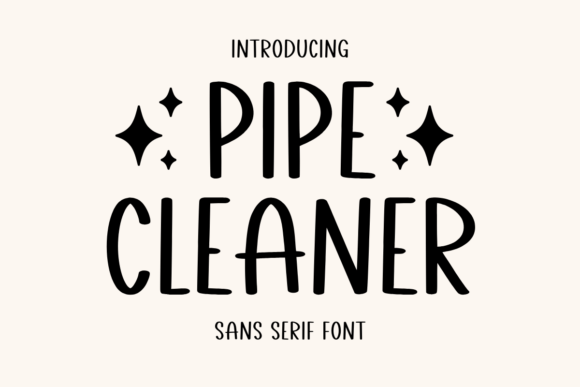
Typography isn’t decoration—it’s functional infrastructure. When you choose a font like Piper Cleaner, you’re not just selecting letters; you’re making a quiet but consequential decision about tone, accessibility, audience perception, and long-term usability. Piper Cleaner is a playful sans-serif font with rounded terminals, open letterforms, and balanced spacing—designed not to shout, but to invite. Its warmth and legibility make it especially effective in contexts where clarity meets care: teacher handouts, student workbooks, daily planners, printable stationery, KDP interior layouts, greeting cards, and digital-first templates for small business owners or educators.
Why Piper Cleaner Fits Real-World Workflows—Not Just Aesthetic Trends
Many fonts promise “friendliness” but sacrifice readability at smaller sizes or in dense layouts. Piper Cleaner avoids that trade-off. Its generous x-height and consistent stroke weight ensure legibility down to 10 pt in printed workbooks or on low-resolution screens—critical for lesson plans used across school devices or PDF planners downloaded by remote teams. That reliability supports operational consistency: when your weekly planner template uses Piper Cleaner, learners and users recognize structure before reading a word. That recognition reduces cognitive load and builds trust in your materials.
For creators selling on KDP or Etsy, Piper Cleaner offers subtle differentiation. In a marketplace saturated with generic sans-serifs or overused script fonts, its gentle playfulness stands out without compromising professionalism. It signals approachability—not informality. A homeschool curriculum using Piper Cleaner feels supportive, not childish. A small-batch greeting card line using the same font conveys sincerity, not gimmickry. That alignment between voice and visual language strengthens brand positioning over time.
Where Piper Cleaner Delivers Measurable Value—And Where It Doesn’t
Piper Cleaner excels in human-centered, action-oriented contexts: to-do lists, habit trackers, journal prompts, classroom instructions, recipe cards, event invitations, and workshop handouts. In each case, the goal isn’t ornamental impact—it’s reducing friction between intention and execution. A teacher printing a behavior chart in Piper Cleaner sees faster student comprehension. A freelancer designing a client onboarding checklist notices fewer follow-up questions about steps. A blogger creating a printable budget tracker finds users more likely to complete and revisit it.
But Piper Cleaner isn’t universally optimal. It’s less suited for formal reports requiring gravitas, legal disclaimers demanding absolute neutrality, or data-dense dashboards where monospaced precision matters more than warmth. Using it there doesn’t break functionality—but it can dilute messaging intent. The strategic risk isn’t aesthetic misstep; it’s misalignment. When font choice contradicts content purpose—say, deploying Piper Cleaner in a compliance manual—you force readers to reconcile tone and task, slowing absorption and weakening authority.
Using Piper Cleaner Intentionally: Three Practical Filters
Before applying Piper Cleaner, ask yourself these questions—not once, but every time:
- Who needs to act on this? If the user is a child, a non-native speaker, someone scanning quickly, or a person managing executive function demands (e.g., ADHD), Piper Cleaner’s openness and rhythm support comprehension and reduce fatigue.
- What behavior do I want to encourage? For reflection (journals), connection (greeting cards), routine (planners), or participation (classroom worksheets), Piper Cleaner lowers the psychological barrier to engagement. It says, “This is for you—not just about me.”
- How will this live beyond the screen? If your design will be printed, photocopied, or viewed on older devices, test Piper Cleaner at actual size and resolution. Its strength lies in real-world resilience—not just pixel-perfect mockups.
Integration Is Strategy—Not Just Styling
Strategic use of Piper Cleaner means integrating it into systems—not just slapping it onto one flyer. Consider how it functions across touchpoints: a teacher might use Piper Cleaner for student-facing handouts and rubrics, while reserving a more neutral sans-serif (like Open Sans or Inter) for parent communications or administrative forms. That contrast isn’t arbitrary—it signals audience and purpose instantly. Similarly, a small business owner launching a wellness planner could use Piper Cleaner for exercise cues and reflection prompts, then switch to a bolder weight or complementary typeface for section headers—creating hierarchy without confusion.
For KDP authors, Piper Cleaner serves dual roles: it enhances interior readability (reducing returns from frustrated readers) and subtly reinforces genre expectations. In journals or guided workbooks, its friendliness aligns with self-development goals. In children’s activity books, it supports early literacy through consistent shape recognition. But consistency matters: if you use Piper Cleaner for body text but default to system fonts for captions or footnotes, cohesion breaks—and so does perceived quality.
Avoiding the “Just Because It’s Cute” Trap
Playful fonts often get deployed as emotional shorthand—“this feels nice, so it must be right.” That impulse undermines intentionality. Piper Cleaner is not inherently “fun”; it’s functionally warm. Its value emerges when paired with thoughtful layout, appropriate color contrast, and clear information architecture. A poorly spaced Piper Cleaner headline with insufficient line height will feel cluttered—not cheerful. A low-contrast gray-on-gray Piper Cleaner paragraph will strain eyes—not soothe them.
That’s why testing matters. Print a sample page of your planner spread. Ask a colleague to scan it for 10 seconds—can they locate the date, priority task, and notes section without prompting? Try your workbook page on a tablet with auto-brightness enabled. Does the text remain distinct under varying light? These aren’t design niceties—they’re usability checkpoints. Piper Cleaner supports those goals only when treated as part of a system—not an isolated element.
Long-Term Positioning: How Piper Cleaner Builds Recognition Without Repetition Fatigue
Unlike highly stylized fonts that age quickly or feel tied to a trend, Piper Cleaner balances personality with timelessness. Its rounded geometry nods to mid-century humanist sans-serifs, but its proportions and spacing reflect contemporary readability standards. That makes it adaptable across years—not just seasons. An educator building a multi-year curriculum library can rely on Piper Cleaner as a consistent thread without appearing stagnant. A stationery brand expanding from planners to calendars and stickers maintains visual continuity without monotony, especially when paired with evolving color palettes or illustration styles.
The key is restraint. Use Piper Cleaner for primary communication layers—body text, labels, short headings—and introduce variation through weight (regular vs. bold), scale, or pairing (e.g., with a clean serif for titles). This creates rhythm and emphasis without abandoning coherence. Over time, that consistency becomes a quiet signature—recognizable to repeat users, trusted by new ones, and scalable across formats.
Final Thought: Typography as Quiet Leverage
Piper Cleaner won’t grow your email list or close a sale—but it can make the difference between a resource that gets opened once and one that gets returned to daily. Between a planner that gathers dust and one that lives on a desk. Between a lesson plan that confuses and one that clarifies. Its strategic power lies in its reliability, its empathy, and its refusal to distract from the work itself. Choose it when your goal is to remove barriers—not add flair. Refine it with purpose—not habit. And always anchor it to outcomes: better understanding, smoother workflows, deeper engagement, or quieter confidence in the people using what you’ve made.