Beautiful Candy: A Strategic Choice for Human-Centered Design
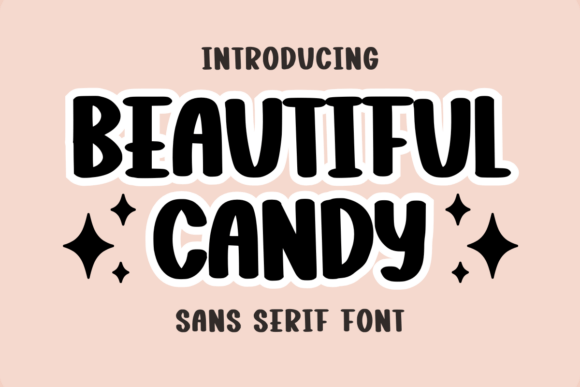
Beautiful Candy is more than a playful sans-serif font—it’s a deliberate design decision with measurable impact on how people engage with your materials. Its rounded, open letterforms and consistent stroke weight create immediate visual warmth without sacrificing legibility. That balance matters: in education, publishing, planning, and small business communication, first impressions shape attention, retention, and action. When used intentionally, Beautiful Candy supports clarity, approachability, and emotional resonance—not just aesthetics.
Why Font Choice Is a Functional Decision, Not Just a Stylistic One
Every font carries implicit signals. Serif fonts often suggest tradition or authority; geometric sans-serifs imply modernity or precision. Beautiful Candy occupies a distinct niche: it communicates friendliness *without* infantilizing, simplicity *without* sterility, and energy *without* chaos. For educators designing classroom handouts, that means students are more likely to read instructions fully. For creators building KDP workbooks or printable planners, it means users feel invited—not intimidated—by the page layout. For small business owners crafting greeting cards or client onboarding kits, it subtly reinforces a brand voice rooted in care and accessibility.
This isn’t about “cuteness.” It’s about reducing cognitive load. Letters with generous counters (the open spaces inside a, e, o) and soft terminals improve scanning speed, especially at smaller sizes or on lower-resolution screens. Beautiful Candy’s consistent x-height and spacing support this across diverse formats—from 8-point journal headers to 48-point invitation titles.
Where Beautiful Candy Delivers Real Outcomes
Strategic use of Beautiful Candy aligns most strongly with goals tied to engagement, comprehension, and emotional connection. Consider these grounded applications:
- Teacher Materials: Lesson plans, behavior charts, and student feedback forms benefit from its readability and tone. A spelling worksheet set in Beautiful Candy feels supportive—not punitive—encouraging effort over perfection.
- KDP Interiors: In journals, guided workbooks, or habit trackers, Beautiful Candy enhances usability. Readers spend less time decoding text and more time reflecting, writing, or acting—directly supporting the book’s intended outcome.
- Printable Stationery & Planners: Daily to-do lists or weekly meal planners gain psychological lightness. The font doesn’t shout urgency; it invites calm intentionality. That distinction affects whether someone revisits the tool day after day.
- Greeting Cards & Invitations: Here, Beautiful Candy works as quiet branding. A baby shower invite using this font conveys joy and tenderness without cliché script. A thank-you card feels personal, not generic—because the typography itself feels handmade, even when digitally produced.
Timing and Context Matter More Than Aesthetics Alone
Beautiful Candy shines when the goal is to soften formality, invite participation, or reduce friction—not when authority, technical rigor, or legal precision is required. Using it for a financial services white paper or a pharmaceutical dosage guide would misalign tone with expectation. Likewise, pairing it with overly decorative elements (e.g., heavy drop shadows, clashing patterns) dilutes its strength: its power lies in clean, confident simplicity.
Before selecting Beautiful Candy, ask three practical questions:
- Who needs to act—and what do they need to feel first? If your audience is fatigued, overwhelmed, or skeptical, Beautiful Candy can serve as subtle reassurance before content even begins.
- What’s the primary interaction? Is this something people will scan quickly (a checklist), write on (a planner), or refer to repeatedly (a curriculum guide)? Beautiful Candy excels where sustained, low-effort reading or writing is expected.
- How does it relate to your broader system? Does it complement—not compete with—your primary brand font? Used as a secondary typeface for headings, callouts, or labels alongside a neutral body font (like Open Sans or Lato), it adds character without compromising hierarchy.
Avoiding Common Pitfalls: When Playfulness Undermines Purpose
The biggest risk with Beautiful Candy isn’t poor execution—it’s unexamined intent. Choosing it because “it looks fun” without anchoring that choice to a specific user need or business objective leads to inconsistency. A teacher using it for every slide, handout, and rubric—regardless of context—may unintentionally erode perceived rigor. A freelancer applying it uniformly across client proposals, invoices, and contracts blurs professional boundaries.
Similarly, overuse flattens impact. If every element on a printable planner—headers, subheaders, captions, footnotes—uses Beautiful Candy at the same weight and size, visual hierarchy collapses. Readers lose cues about importance and flow. The font’s strength is relational: it gains meaning through contrast, not repetition.
Practical Integration Tips for Long-Term Value
Integrating Beautiful Candy effectively requires planning—not just installation. Start by defining its role within your workflow:
- Limit its scope. Assign it one clear function: e.g., “Beautiful Candy is used only for section headers in all student-facing PDFs” or “Only for handwritten-style callouts in digital planners.” This builds recognition and reinforces purpose.
- Test at real scale. Preview how it renders at common sizes: 10 pt for journal sidebars, 14 pt for workbook instructions, 24 pt for calendar month labels. Adjust line height and letter spacing if needed—don’t assume default settings suffice.
- Pair deliberately. Combine with a highly legible, neutral sans-serif for body text (e.g., Inter, Roboto, or Nunito). Avoid pairing with other rounded fonts or scripts—they’ll compete rather than complement.
- Consider output constraints. If distributing printables for home printing, verify Beautiful Candy remains crisp at 72–96 PPI. Some free versions lack hinting for low-res rendering; licensed versions typically perform more reliably.
Building Consistency Without Conformity
Beautiful Candy supports long-term brand coherence when treated as a tool—not a trend. Educators who use it consistently across lesson hooks, reflection prompts, and exit tickets build a recognizable learning environment. Small business owners who apply it to client welcome kits, service menus, and seasonal promotions cultivate familiarity without repetition. The consistency isn’t in visual sameness—it’s in functional alignment: each use serves the same underlying goal—to make information feel accessible, human, and worth engaging with.
That alignment compounds over time. A parent recognizing the gentle rhythm of Beautiful Candy on a child’s homework sheet may feel more confident navigating a school newsletter set in the same typeface. A customer receiving a beautifully structured planner with consistent typography is more likely to trust future offerings from the same creator—even before reading a word.
Final Thought: Typography as Quiet Strategy
Beautiful Candy doesn’t replace strong content, sound pedagogy, or thoughtful UX. But it does amplify them—when chosen with intention. It lowers barriers to entry, sustains attention, and quietly affirms that the person on the other side of the page matters. That’s not decoration. It’s design operating at its most strategic level: shaping experience before a single sentence is read.
So before you select Beautiful Candy for your next project, pause—not to admire its curves, but to clarify your objective. Then let the font do what it does best: make your purpose feel both clear and kind.