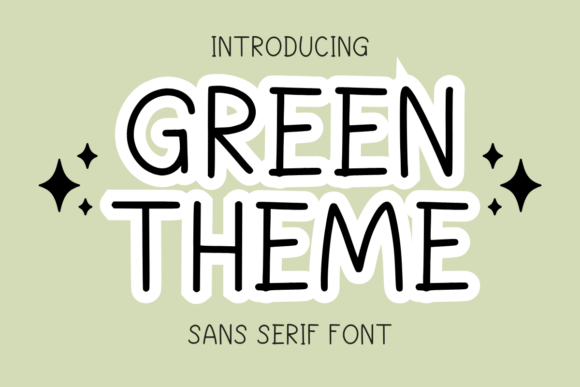
Green Theme Font: The Playful, Versatile Sans-Serif That Brings Warmth to Everyday Design
There’s a quiet magic in choosing the right font—not one that shouts, but one that smiles. Green Theme does exactly that. It’s a friendly, hand-drawn-inspired sans-serif with gentle curves, open letterforms, and just enough personality to feel human—without sacrificing clarity or usability. Whether you’re designing a kindergarten worksheet, laying out a printable habit tracker, or crafting a birthday card for a friend, Green Theme slips into your workflow like a trusted pen: reliable, expressive, and effortlessly warm.
What Makes Green Theme Stand Out in a Crowded Font Landscape?
In a world saturated with ultra-thin geometric fonts and overly rigid neo-grotesques, Green Theme offers something refreshingly grounded. Its lowercase “a” and “g” feature soft, single-story shapes. Letters like “e”, “s”, and “c” have subtle, rounded terminals—not perfectly circular, but thoughtfully organic. Even the spacing feels intentional: generous enough for readability at small sizes (think 10–12 pt in workbooks), yet cohesive enough to hold visual rhythm in headlines.
Unlike many playful fonts that sacrifice legibility for charm, Green Theme maintains strong x-height and clear letter differentiation—critical when designing for children, neurodiverse learners, or anyone scanning a busy planner page. It’s not “cute” in a cloying way; it’s kind. That distinction matters—especially in educational and wellness-adjacent spaces where tone impacts engagement.
Where Green Theme Truly Shines: Real Projects, Real Use Cases
You don’t need a design degree to get great results with Green Theme. Its strength lies in how naturally it adapts across formats and functions:
- Teacher Materials: From spelling quizzes to classroom job charts, Green Theme adds approachability without looking childish. Try pairing it with a clean, neutral sans (like Inter or Open Sans) for body text—letting Green Theme handle headings, labels, and interactive elements like checkboxes or drag-and-drop prompts.
- KDP Interiors & Printables: On Amazon KDP, first impressions happen fast. A workbook or journal using Green Theme stands out on thumbnail previews—not because it’s flashy, but because it signals warmth, care, and intentionality. Readers scrolling for “calm coloring journals” or “mindful planning tools” subconsciously register its friendliness before they even read the title.
- Digital Planners & Notion Templates: Yes—even on screen, Green Theme works beautifully. When exported as a PDF or embedded in a digital planner, its rounded forms reduce visual fatigue during long sessions. Bonus: it renders crisply at high DPI, so your daily to-do list looks polished whether viewed on an iPad or printed at home.
- Greeting Cards & Invitations: Skip the overused script fonts for casual celebrations. A baby shower invite set in Green Theme, paired with soft watercolor textures, feels personal and unhurried. Same goes for thank-you notes, teacher appreciation cards, or even minimalist wedding stationery aiming for heartfelt over formal.
- Scrapbooking & Journaling Kits: If you create layered PNG kits or SVG bundles for crafters, Green Theme is a smart inclusion. Its consistent stroke weight and balanced proportions make it ideal for cutting machines—and its joyful vibe complements floral motifs, doodle borders, and pastel palettes without competing.
Why Designers (and Non-Designers) Choose Green Theme Again and Again
It’s not just about aesthetics—it’s about efficiency and emotional resonance. Here’s what users consistently report:
- Fast Integration: Comes with full Latin character sets, standard punctuation, numerals, and basic diacritics—no hunting for alternate glyphs mid-project. No ligatures to accidentally enable or disable. Just install, select, and go.
- Print-Ready Clarity: Tested across inkjet and laser printers, Green Theme holds up beautifully at 8 pt in answer keys and 14 pt in cover titles. No fuzzy edges, no collapsed counters—even on matte paper stock.
- Licensing Flexibility: Most versions include commercial use rights, covering everything from Etsy printables to client-branded teacher resources. Always double-check your license, but standard offerings support KDP, Canva templates, and even small-batch physical goods like sticker sheets or notebook covers.
- Low Cognitive Load: For students, seniors, or anyone fatigued by dense typography, Green Theme reduces reading friction. Letters are distinct, spacing is forgiving, and there’s zero ambiguity between similar shapes (like “I”, “l”, and “1”).
Pairing Green Theme Thoughtfully: Complement, Don’t Compete
A playful font gains power through contrast—not clutter. Think of Green Theme as the lead vocalist: warm, expressive, and memorable. It needs a solid rhythm section behind it.
For body copy or supporting text, lean into clean, highly legible sans-serifs: Inter (free, variable, and exceptionally versatile), Manrope (friendly but neutral), or even Roboto Condensed for tight layouts like calendar grids. Avoid other display or handwritten fonts in the same composition—they’ll fight for attention and dilute Green Theme’s impact.
When working in Canva or Adobe Express, use Green Theme for:
- Section headers (“This Week’s Goals”, “Reflection Prompt”)
- Callout boxes and tip icons
- Handwritten-style accents (e.g., “Don’t forget!” next to a checklist)
- Custom bullet points or decorative dividers (export individual letters as SVGs for reuse)
Practical Tips Before You Download Green Theme
Before adding Green Theme to your next project, consider these real-world checks:
- Preview at actual size: Don’t judge it at 72 pt on your monitor. Paste a sample sentence into your target document—say, a 6×9” KDP interior—and zoom to 100%. Does the “r” look sturdy? Is the “o” round and open? Trust what you see at working scale.
- Test color contrast: Its medium-weight design shines against light backgrounds—but avoid very pale yellows or washed-out greens. For accessibility, pair it with dark charcoal (#333333) or deep navy, not pure black, to soften contrast.
- Check file format compatibility: Most versions come as .OTF or .TTF. While both work in modern apps, .OTF handles advanced features more gracefully. If you’re using older software (or certain Cricut platforms), verify TTF support first.
- Consider weight options: Some releases include Light, Regular, and Bold variants. If your project needs hierarchy (e.g., bold headers + regular subheads), confirm the package includes multiple weights—not just one style with faux-bold applied.
Green Theme in the Wild: Beyond the Obvious
Look closely, and you’ll spot Green Theme doing quiet, effective work in places you might not expect:
A pediatric therapist’s emotion-regulation worksheet uses it for facial expression labels—its openness helps kids focus on the content, not decoding letters. A small-batch candle brand chooses it for ingredient tags, balancing artisanal warmth with clean professionalism. A nonprofit creating bilingual summer learning packets uses it for English headers alongside a carefully matched Spanish sans, reinforcing inclusivity through tone, not translation alone.
That’s the subtle power of Green Theme: it doesn’t dominate. It supports. It invites. It says, “You belong here.” In an age of algorithmic feeds and transactional interactions, that kind of quiet intentionality isn’t just nice—it’s necessary.
Getting Started—Without Overthinking It
You don’t need a mood board or a branding strategy to begin. Open your planner template. Highlight a heading. Swap in Green Theme. Adjust tracking if needed (+20–40 units often helps). Print a test page. Notice how much lighter the whole thing feels—not visually, but emotionally.
That’s the signal. When a font makes your to-do list feel less like a demand and more like an invitation? That’s when you know you’ve chosen well.