Winter Cute: A Playful Sans-Serif Font for Everyday Design Work
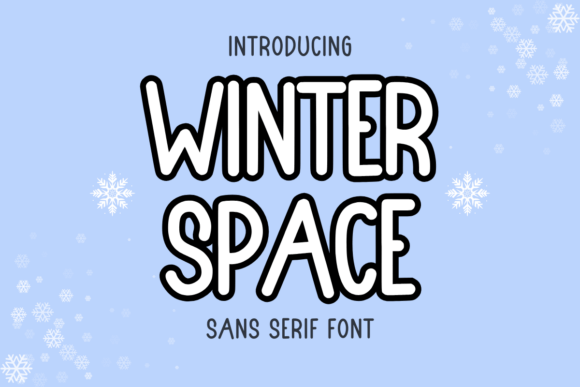
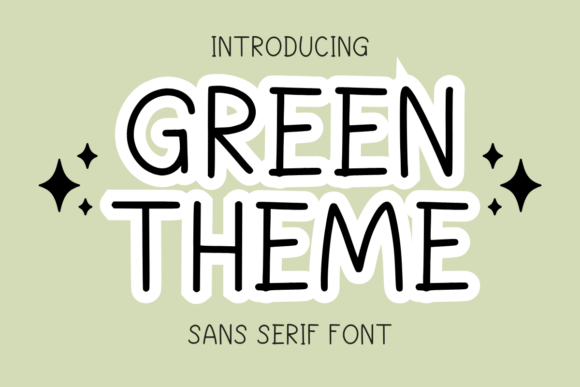
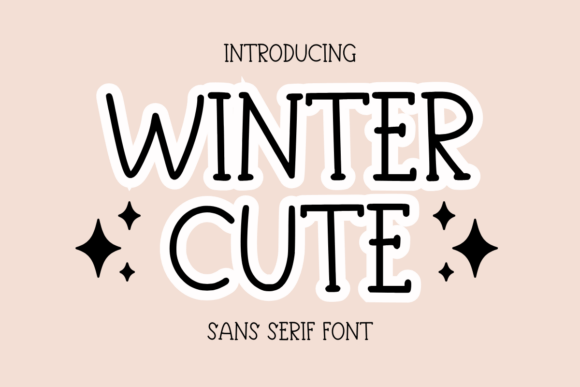
Winter Cute isn’t a trend-driven novelty—it’s a deliberately crafted sans-serif typeface built for clarity, warmth, and quiet versatility. Designed with soft curves, open counters, and balanced proportions, it avoids the overly cutesy or juvenile associations that sometimes limit similar fonts. Instead, Winter Cute occupies a thoughtful middle ground: friendly without being childish, legible without sacrificing personality, and consistent enough to support extended reading—yet expressive enough to stand out in visual hierarchy.
What Makes Winter Cute Distinctive in Practice
At first glance, Winter Cute reads as approachable—its rounded terminals, gentle stroke contrast, and slightly generous x-height contribute to that impression. But its real strength lies in how those features behave across contexts. Unlike many decorative or script-leaning “cute” fonts, Winter Cute maintains strong typographic fundamentals: even spacing, clear letterform distinction (especially critical for i, l, 1, and O/0), and stable baseline alignment. That means it holds up well in multi-line body text—not just headlines or single-word accents.
The font includes standard Latin characters, numerals, punctuation, and basic diacritics, covering most English-language use cases out of the box. It lacks extended language support (e.g., Cyrillic, Greek, or extended Vietnamese), so users working with multilingual content will need to plan for fallbacks or pairing strategies.
Where Winter Cute Delivers Real-World Value
Winter Cute shines where tone matters as much as function—particularly in materials meant to feel personal, encouraging, or intentionally low-pressure. Educators use it in classroom handouts and behavior charts because it softens directives without undermining authority. Small business owners apply it to weekly newsletter headers or printable customer thank-you cards, where warmth supports relationship-building without seeming unprofessional. In KDP interior design, it adds subtle character to journal prompts, habit trackers, and guided reflection pages—enhancing usability through emotional resonance rather than visual noise.
Its flexibility becomes especially apparent in layered layouts. For example:
- A daily planner spread might use Winter Cute for section titles and handwritten-style notes, paired with a neutral sans-serif like Inter or Open Sans for dates and checkboxes—creating rhythm without clutter.
- In printable stationery, its moderate weight allows clean laser or inkjet printing at 10–12 pt sizes, avoiding fill-in or bleeding on standard 80–100 gsm paper.
- For digital PDF planners or Notion templates, Winter Cute renders crisply on screens at medium sizes and remains readable when zoomed—unlike some highly stylized alternatives that pixelate or lose distinction.
Quality and Consistency Across Formats
Winter Cute is distributed as a well-structured OTF file, supporting OpenType features like standard ligatures and stylistic alternates (where available). Kerning is applied thoughtfully—particularly in common pairs like “To,” “We,” and “Go”—reducing awkward gaps that can disrupt flow in headings or short phrases. The font’s hinting is adequate for screen use, though it’s not optimized for extreme small sizes (<8 pt) on low-DPI displays.
Print performance is reliable: no unexpected glyph substitutions, no missing symbols in common punctuation sets, and no rendering inconsistencies across major design platforms (Adobe Creative Cloud, Affinity Suite, Canva Pro, and Figma with proper font loading). Users report minimal issues embedding it in PDFs intended for commercial printing—provided embedding permissions are respected and the file is flattened correctly.
Who Benefits Most—and When to Consider Alternatives
Winter Cute suits professionals who prioritize tone alignment over novelty. Teachers preparing student-facing materials, indie publishers developing guided journals, freelance designers crafting brand-consistent stationery bundles, and small studios building Notion or PDF-based productivity tools all find it useful—not because it’s “trendy,” but because it solves specific communication challenges: reducing perceived friction in instructions, softening institutional tone, or adding quiet cohesion to themed product lines.
That said, it’s not universally appropriate. It’s less effective in formal reports, legal disclaimers, technical documentation, or branding systems requiring high contrast or gravitas. If your audience expects precision, austerity, or traditional authority—think financial services, academic publishing, or enterprise SaaS dashboards—Winter Cute may misalign with expectations. Similarly, projects demanding strong visual branding hierarchy (e.g., magazine covers or app UI) often benefit more from bolder, more differentiated type families.
Practical Integration Tips
Start simple. Use Winter Cute for:
- Headings and subheadings in planners, workbooks, and printable checklists—its shape creates instant recognition without competing with content.
- Caption text in scrapbook kits or photo journal templates, where readability and charm coexist naturally.
- Callout boxes in educational materials, such as “Try This!” or “Remember” prompts—its friendliness invites engagement without sounding prescriptive.
Avoid overusing it for full paragraphs beyond ~150 words unless line height, letter spacing, and column width are carefully tuned. For longer blocks, pair it with a neutral, highly legible companion (e.g., Lato, Source Sans Pro, or IBM Plex Sans) to preserve pacing and reduce visual fatigue.
Long-Term Usability and Workflow Fit
Winter Cute integrates cleanly into both manual and automated workflows. Its straightforward naming convention (WinterCute-Regular.otf) prevents confusion in shared design environments. Version control is uncomplicated—no frequent updates or breaking changes have been reported since its initial release, suggesting stable maintenance. Licensing is typically clear: most vendors offer perpetual, multi-user licenses suitable for commercial use, including resale of derivative digital products (e.g., printable planners sold on Etsy or Gumroad), provided the font file itself isn’t redistributed.
One practical limitation: Winter Cute doesn’t include variable axes (weight, width, slant), so designers needing fine-grained typographic control must rely on discrete weights—or supplement with another family. That’s rarely a barrier for its core use cases, but worth noting if your workflow depends heavily on variable font responsiveness.
Ultimately, Winter Cute earns its place not by trying to be everything, but by doing a narrow set of things well: supporting clarity while conveying approachability, scaling reliably across print and screen, and fitting seamlessly into workflows where emotional tone is part of the deliverable—not an afterthought. It’s the kind of font you reach for when you want your design to say, “This is useful—and it’s okay to enjoy using it.”