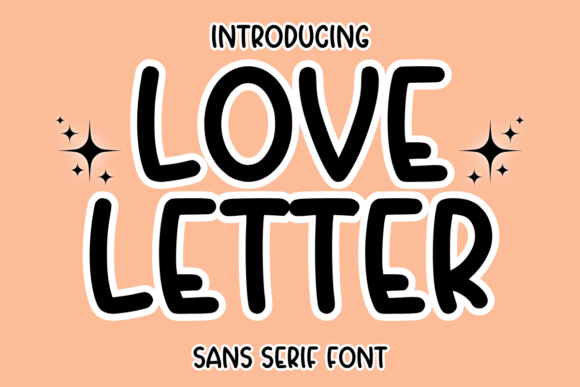
Love Letter: The Playful Sans-Serif That Fits Real Life
Love Letter isn’t just another font—it’s a thoughtful response to how we write, plan, and express ourselves today. Designed with warmth and clarity in mind, this playful sans-serif bridges the gap between personality and professionalism. It doesn’t shout; it invites. Whether you’re drafting a gentle reminder to your team, sketching ideas in a bullet journal, or designing a printable habit tracker for your students, Love Letter delivers consistency without stiffness—and charm without clutter.
Why a Font Like Love Letter Matters Now
We’re living in an era where digital fatigue is real, but so is the desire for tactile, human-centered tools. Paper planners are selling alongside Notion templates. Teachers print weekly check-ins for their classrooms. Freelancers design branded workbooks for clients. And indie authors self-publish beautifully typeset journals on KDP—where readability, tone, and visual cohesion directly influence reader trust and engagement.
In that context, typography isn’t decorative—it’s functional empathy. A font like Love Letter supports intentionality: its open letterforms improve legibility at small sizes (critical for to-do lists and calendar grids), while its subtle curves and balanced proportions lend approachability to formal documents like classroom handouts or client-facing worksheets. It doesn’t try to be everything—but it does many things well, quietly adapting to context instead of demanding attention.
From Notes to Notebooks: Where Love Letter Fits Naturally
Think about the materials you interact with daily—not just screens, but printed pages, sticky notes, lesson plans, greeting cards, and student feedback forms. These aren’t relics; they’re active parts of modern workflows. Educators use printable planners to scaffold executive function skills. Small business owners create branded notepads for client meetings. Journalers mix analog reflection with digital capture—and often return to paper for its cognitive benefits and emotional resonance.
Love Letter thrives in these spaces because it avoids extremes. It’s not overly whimsical (so it won’t undermine credibility in a professional workbook), nor is it sterile (so it won’t feel cold in a birthday card or gratitude journal). Its x-height is generous, aiding readability in low-contrast print environments like newsprint or recycled paper. Its spacing is optimized for both tight grids (think weekly planner headers) and generous margins (like lined notebook paper or scrapbook journaling blocks).
Real-World Uses You Might Not Expect
- Classroom handouts: Teachers report better student engagement when assignments feel less intimidating—Love Letter’s friendly rhythm helps soften dense instructions without sacrificing clarity.
- KDP interior design: For self-published planners and guided journals, consistent, readable type improves perceived value. Love Letter pairs well with clean serif body text or stands alone in minimalist layouts.
- Printable habit trackers: Its rounded terminals reduce visual “noise” in repetitive checkbox designs, making daily use feel lighter and more sustainable.
- Greeting cards & invitations: Unlike rigid geometric sans-serifs, Love Letter conveys sincerity—ideal for milestone announcements, baby shower invites, or thank-you notes that balance warmth and polish.
How Love Letter Aligns With Evolving Creative Practices
Few designers today start from scratch—they remix, adapt, and scale. A growing number of creators rely on modular templates: one base font family used across planners, calendars, and companion workbooks. Love Letter works as part of that system—not as a standalone flourish, but as a reliable voice across formats. Its versatility means fewer font swaps, less formatting friction, and more time spent refining content instead of chasing typographic consistency.
This reflects a broader shift: away from “font-as-decor” and toward “font-as-infrastructure.” Think of it like choosing a durable pen—not flashy, but dependable across notebooks, sticky notes, whiteboards, and digital annotations. Love Letter serves that role digitally and in print, scaling cleanly from 8 pt (for footnote references in a teacher’s curriculum guide) to 48 pt (for a bold workshop title on a printable poster).
Practical Considerations for Professionals and Creators
If you're selecting fonts for client projects or personal products, consider not just aesthetics—but sustainability of use. Love Letter includes full Latin character sets, standard ligatures, and OpenType features that support multilingual classroom resources or bilingual greeting cards. It renders reliably across platforms: whether embedded in a PDF planner, exported as a PNG for social media, or converted to web font for a blog’s printable library.
For educators building custom learning tools, Love Letter’s clarity supports accessibility goals—especially when paired with sufficient line height and contrast. For entrepreneurs launching digital products, its licensing permits commercial use across physical and digital deliverables, including resale of printables and subscription-based template libraries.
It also pairs intuitively. Try it with a neutral serif (like Merriweather or Lora) for body text in workbooks, or layer it with a restrained monospace for code snippets in a tech-adjacent planner. Its personality is present but never dominant—making collaboration smoother when multiple stakeholders review layout drafts.
Beyond Aesthetics: What This Says About Our Priorities
The rising appreciation for fonts like Love Letter signals something deeper: a cultural recalibration around pace, presence, and purpose. We’re choosing tools that reflect care—not just efficiency. A handwritten note feels meaningful because it takes time. A well-designed planner feels supportive because it reduces cognitive load. And a font like Love Letter supports both by feeling intentional, not incidental.
This isn’t nostalgia—it’s refinement. Just as we now favor ergonomic keyboards over clunky ones, or matte-finish notebooks over glossy, we’re selecting type that supports how our eyes move, how our hands write, and how our minds absorb information. Love Letter fits that evolution not because it’s trendy, but because it’s calibrated: friendly enough for personal reflection, sturdy enough for professional reuse.
Making It Work for You—Without Overcomplicating
You don’t need to overhaul your entire toolkit to benefit from Love Letter. Start small:
- Swap it in for your next printable to-do list or weekly reflection sheet—notice how the rhythm changes the tone.
- Use it for section headers in a student workbook, keeping body text in a highly legible serif. The contrast adds hierarchy without distraction.
- Apply it to invitation copy in Canva or Adobe Express—its even weight holds up well in automated resizing and mobile previews.
- Test it in a KDP interior mockup at actual print size. See how it performs in grayscale, on textured paper, and beside hand-drawn elements.
What matters most isn’t whether Love Letter is “the best” font—but whether it makes your next project feel more aligned with your intent. Does it help your audience feel seen? Does it simplify your workflow instead of adding steps? Does it hold up across formats without constant tweaking?
When a font answers those questions consistently—across planners, lesson plans, greeting cards, and digital printables—it earns its place not as decoration, but as infrastructure. Love Letter does exactly that: quietly, thoughtfully, and without fanfare.