Cozy Corner: The Playful Sans-Serif That Feels Like Home
There’s a quiet magic in typography—the way a single font can shift the mood of a planner, soften the tone of a classroom handout, or turn a simple note into something warm and personal. Cozy Corner is one of those rare typefaces that doesn’t just look good—it feels intentional, inviting, and quietly confident. Designed with approachability at its core, this playful sans-serif strikes a thoughtful balance between charm and clarity.
More Than Just “Cute”: What Makes Cozy Corner Stand Out
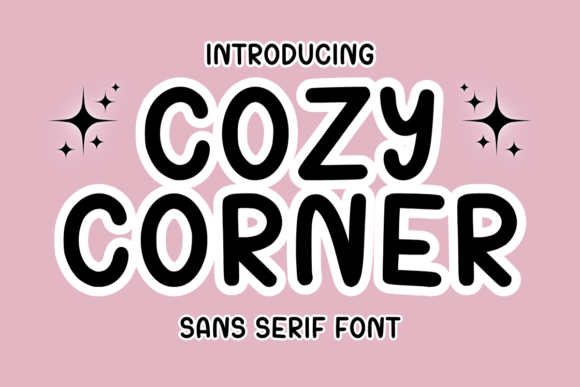
At first glance, Cozy Corner reads as friendly—rounded terminals, gentle curves, and open letterforms invite the eye without demanding attention. But look closer, and you’ll notice subtle craftsmanship: consistent stroke contrast, generous x-heights for legibility at small sizes, and carefully spaced characters that breathe well on the page. It’s not overly decorative, yet it carries personality. Unlike many playful fonts that sacrifice function for flair, Cozy Corner was built to perform across real-world applications—from printed workbooks to digital planners.
Its versatility comes from intention, not compromise. Each glyph supports readability without losing warmth. Capital letters have a soft presence—not bold or commanding, but steady and kind. Lowercase letters flow naturally, making long passages in journals or lesson plans feel effortless to read. And because it’s a true sans-serif (no serifs, no frills), it scales beautifully—from 8-point notebook headers to 48-point invitation titles.
Where Cozy Corner Truly Shines
This isn’t a font that waits for special occasions. Cozy Corner thrives in everyday spaces—where practicality meets personality. Here’s where users consistently find it most effective:
- Education & Teaching Tools: Teachers use Cozy Corner for classroom posters, behavior charts, reading logs, and student handouts—its friendliness reduces visual stress for young readers while maintaining professionalism for colleagues and parents.
- Digital & Print Planners: Whether designing KDP interiors, printable weekly spreads, or Notion templates, creators choose Cozy Corner for headers, section dividers, and light body text—its rhythm supports habit tracking without overwhelming the layout.
- Greeting Cards & Invitations: From baby showers to milestone birthdays, Cozy Corner adds sincerity without cliché. It pairs effortlessly with watercolor backgrounds, minimalist line art, or clean photography—never competing, always complementing.
- Scrapbooking & Journaling: Its balanced weight and organic flow make it ideal for handwritten-style captions, memory prompts, and dated entries. Users report it feels like “a voice you already trust”—which matters when documenting life’s small, meaningful moments.
- Business Branding (Small & Thoughtful): Local boutiques, wellness coaches, and creative studios often use Cozy Corner for email headers, workshop workbooks, and client welcome kits—conveying care, accessibility, and authenticity without sounding corporate or childish.
Who Benefits Most From This Font?
Cozy Corner resonates strongest with people who value both aesthetics and utility—and who understand that tone matters as much as content. That includes:
- Educators building inclusive, visually calm learning environments;
- Indie creators selling printables, planners, or journal kits on Etsy or Gumroad;
- KDP authors formatting interiors for guided journals, habit trackers, or children’s activity books;
- Small business owners crafting branded materials that feel human-first;
- Students and professionals customizing digital notebooks (like Obsidian or GoodNotes) or printing personalized to-do lists and calendars.
It’s especially helpful for anyone who’s ever hesitated between “too formal” and “too whimsical.” Cozy Corner sits comfortably in the middle—polished enough for professional use, tender enough for personal reflection.
Real-World Use Cases You Can Try Today
You don’t need design experience to benefit from Cozy Corner. Here are three accessible ways to begin:
1. Upgrade Your Daily Planner
Swap out default system fonts in your printable weekly spread. Use Cozy Corner for time blocks, habit checkboxes, and margin notes. Its rounded shapes soften rigid grids, making structure feel supportive—not restrictive.
2. Refresh Classroom Handouts
Replace Arial or Calibri in your next worksheet or rubric. Students respond more readily to materials that feel welcoming—and Cozy Corner subtly signals that effort, care, and clarity were part of the design process.
3. Personalize a Greeting Card
Whether designing digitally or handwriting over a printed template, use Cozy Corner for the main message. Its even spacing and gentle rhythm keep emotional intent front and center—no distractions, no stiffness.
What to Keep in Mind: Strengths & Practical Considerations
Cozy Corner excels where warmth and legibility intersect—but like any tool, it has natural boundaries. Understanding them helps you use it more effectively:
- Strength: Outstanding readability at medium-to-small sizes (10–16 pt), especially in print. Ideal for dense layouts like workbooks or multi-week calendars.
- Strength: Seamless cross-platform compatibility—works reliably in Canva, Adobe Suite, Google Docs (via add-ons), and most desktop publishing tools.
- Consideration: While highly legible, it’s not optimized for long-form body text in novels or academic papers—save it for headings, callouts, and short-form content where its personality shines.
- Consideration: Avoid ultra-thin weights for low-resolution screens or laser-printed documents; stick with Regular or Medium for best results in physical outputs.
- Limitation: It does not include extensive language support (e.g., Cyrillic or extended diacritics), so multilingual educational materials may require pairing with a complementary font.
Evaluating Fit: Is Cozy Corner Right for Your Project?
Ask yourself these three questions before choosing Cozy Corner:
- Does my project benefit from approachability over authority? If you’re aiming for trust, comfort, or encouragement—not command or formality—this font aligns naturally.
- Will it appear alongside other fonts? Cozy Corner pairs beautifully with neutral sans-serifs (like Inter or Lato) or gentle serifs (like Cormorant Garamond). Avoid clashing with highly geometric or condensed fonts unless intentionally contrasting.
- Is legibility at smaller sizes essential? If your use case involves footnotes, grid labels, or tight planner layouts, test print samples at actual size—Cozy Corner typically performs better than flashier alternatives here.
In short: if your goal is to make functional design feel human, Cozy Corner isn’t just suitable—it’s quietly essential.
A Final Thought: Typography as Quiet Care
Fonts rarely get credit for emotional labor—but they do work. Every time someone pauses over a planner header set in Cozy Corner, or smiles at a greeting card that feels like a hug in typeform, that’s design doing its deepest job. Cozy Corner doesn’t shout. It listens. It adapts. And whether you're a teacher prepping Monday’s lesson, a parent designing a birthday invite, or a creator launching your tenth KDP workbook—it meets you where you are: practical, present, and full of quiet intention.