Cupids Whisper: A Playful Sans-Serif with Purpose
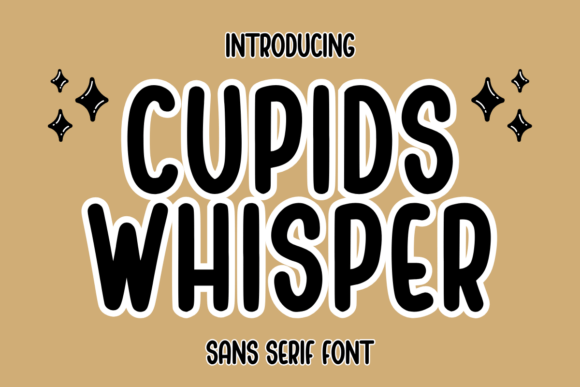
When you’re designing a planner, drafting a classroom handout, or laying out a greeting card, typography does more than look pretty—it shapes how people feel, read, and engage. Cupids Whisper stands out not because it shouts, but because it invites: a friendly, uncluttered sans-serif with subtle personality—soft curves, gentle spacing, and just enough whimsy to feel human without sacrificing clarity.
Why Type Choice Matters More Than You Think
A font isn’t just decoration. It’s part of your communication infrastructure. Choose one that feels stiff or overly ornate for a weekly planner, and users may subconsciously resist filling it in. Pick something too neutral—like a generic system font—and your printable loses distinction in a sea of digital templates. Cupids Whisper bridges that gap: legible at small sizes (think 8–10 pt for notebook headers or calendar grids), expressive enough to carry tone (a cheerful invitation or a thoughtful journal prompt), and consistent enough to build visual trust across multi-page documents.
Where Cupids Whisper Fits Naturally—Without Forcing It
This isn’t a “one-size-fits-all” font—but it *is* a “fits-where-it-feels-right” font. Its strength lies in context, not coverage. Here’s where it consistently delivers:
- Teachers crafting classroom resources: Use Cupids Whisper for student-facing worksheets, behavior charts, or reading logs. Its open letterforms reduce visual crowding—a subtle but meaningful advantage for emerging readers or neurodiverse learners. Unlike some playful fonts, it avoids exaggerated quirks that distract from content.
- KDP authors building interiors: For journals, guided workbooks, or habit trackers, Cupids Whisper supports readability over long stretches while keeping the aesthetic warm and approachable. It pairs well with clean serif body text (like Merriweather or Lora) for contrast—headings in Cupids Whisper, paragraphs in serif—creating hierarchy without competing voices.
- Small business owners designing printables: Whether it’s a seasonal planner bundle or custom wedding stationery, this font adds quiet charm without demanding attention. It doesn’t scream “handmade”—it whispers “thoughtful,” which aligns well with audiences valuing authenticity over flash.
- Freelancers and creators building templates: If you sell Notion templates, Canva layouts, or printable PDFs, consistency matters. Cupids Whisper holds up across formats—crisp on screen, smooth when printed, and scalable without losing its character. That reliability saves time on manual kerning or fallback font swaps.
Real-World Use Cases That Go Beyond Aesthetics
Consider a teacher preparing a monthly homework tracker. Using Cupids Whisper for section headers (“Reading Goals,” “Math Practice,” “Science Notes”) creates visual rhythm while signaling each category as distinct yet connected. Students scan faster—not because the font is flashy, but because spacing and weight support quick recognition.
Or imagine an entrepreneur launching a wellness brand. Their downloadable self-care checklist needs to feel supportive, not clinical. Cupids Whisper lends warmth to bullet points and affirmations without veering into cutesy territory—keeping the tone grounded and inclusive.
Even in professional settings, like internal team memos or project briefs, this font softens formality just enough. Paired with a restrained color palette and ample white space, it encourages engagement rather than passive skimming.
What Cupids Whisper Doesn’t Do—And Why That’s Helpful
It won’t replace a robust display font for bold logos or large-scale signage. It’s not designed for ultra-narrow columns or dense legal disclaimers where maximum information density is required. And while it works beautifully in lowercase and sentence case, all-caps usage can mute its charm—its personality lives in the interplay of ascenders and descenders.
That’s not a limitation—it’s intention. Cupids Whisper was built for moments where clarity meets kindness: the margin note in a student’s journal, the gentle reminder in a habit tracker, the handwritten-style header on a birthday card. Trying to stretch it into roles it wasn’t shaped for—like technical documentation or data dashboards—means missing opportunities to use more purpose-built typefaces instead.
Pairing Tips That Keep Your Design Cohesive
Font pairing isn’t about rules—it’s about resonance. With Cupids Whisper, think contrast through structure, not starkness:
- For body text: Try a modest serif (e.g., Cormorant Garamond Light or PT Serif Caption) at 11–12 pt. The serif grounds the layout; Cupids Whisper lifts the hierarchy.
- For contrast in headings: A slightly bolder weight of the same font family often works better than switching to a completely different sans-serif—preserving harmony while adding emphasis.
- Avoid over-layering: Don’t stack Cupids Whisper with another playful font (like a script or condensed display face). Its quiet confidence shines when given room—not competition.
Who Benefits Most—and Why Timing Matters
Educators, indie publishers, and service-based creatives tend to see the highest return on using Cupids Whisper early in their workflow—not as an afterthought, but as part of their design system. When you choose it before building your first planner page or workbook module, you avoid retrofitting later. Consistency compounds: students recognize your materials faster, buyers associate your brand with calm professionalism, and collaborators understand your visual language without explanation.
It’s especially valuable during seasonal launches—back-to-school planning, holiday card design, or New Year goal-setting products—because its tone supports reflection and intention without leaning into cliché.
A Final Thought on Intentional Typography
In a world saturated with templates, stock graphics, and AI-generated layouts, the choice of a single font like Cupids Whisper becomes quietly powerful. It signals care—not just in aesthetics, but in how information is offered, received, and retained. You don’t need dramatic flourishes to make something memorable. Sometimes, the most effective design decision is choosing a voice that listens as much as it speaks.