Box Santa: The Handwritten Font That Turns Everyday Notes Into Moments of Joy
Imagine opening your planner and seeing your to-do list not as a dry checklist—but as a friendly, whimsical whisper from your own hand. That’s the quiet magic of Box Santa: a handwritten sans serif font designed not just to be read, but to be felt. It doesn’t shout. It smiles. It invites. And in a digital world saturated with sterile uniformity, Box Santa offers something rare—authentic warmth, rendered in clean, approachable letterforms.
What Makes Box Santa Different—Really?
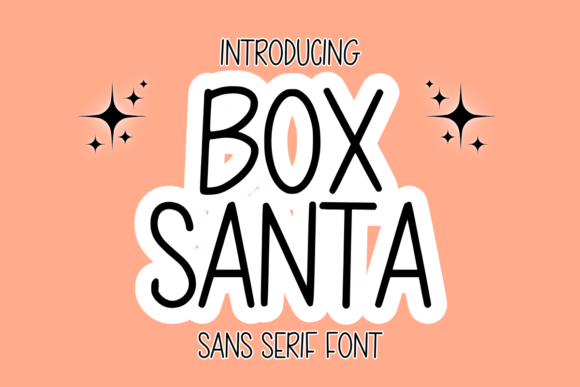
At first glance, Box Santa looks like someone’s joyful handwriting—rounded, relaxed, and effortlessly human. But unlike many script fonts that rely on dramatic flourishes or rigid calligraphic rules, Box Santa is a sans serif with soul. Its letters sit comfortably on the baseline, with gentle inconsistencies that mimic natural pen pressure—not errors, but personality. There’s no forced elegance here. Just honesty, playfulness, and quiet confidence.
Key characteristics include:
- Open counters and generous spacing—making it highly legible even at small sizes (think journal headers or planner checkboxes)
- Subtle variation in stroke weight—enough to suggest hand-drawn charm without sacrificing clarity
- No sharp angles or aggressive terminals—every curve feels intentional, every corner softened with care
- Full language support and OpenType features—including stylistic alternates and ligatures for nuanced expression
This isn’t just “cute.” It’s considered. Every glyph was drawn to serve real use—not just aesthetics, but function, emotion, and accessibility.
Where Box Santa Shines (and Where It Might Pause)
Box Santa thrives where warmth meets utility. It’s built for moments that matter—not grand announcements, but the small, repeated interactions we have with paper and ink every day.
Best-Fit Applications
- Digital Planners & KDP Interiors: Whether you’re designing a printable weekly spread or a full-color journal for Amazon KDP, Box Santa adds instant charm without compromising professionalism. Teachers use it for editable lesson plan templates; therapists choose it for mood trackers—its tone feels supportive, never childish.
- Printable Stationery: From gratitude journals to habit trackers and recipe cards, Box Santa turns functional sheets into keepsakes. Its readability ensures users won’t squint over bullet points—and its rhythm encourages consistent use.
- Educational Materials: In classrooms, Box Santa helps lower cognitive load. Young readers recognize letter shapes more easily when forms are consistent yet expressive. ESL tutors report students respond more positively to vocabulary flashcards set in Box Santa versus rigid sans serifs.
- Scrapbooking & Memory Keeping: Paired with soft watercolor backgrounds or minimalist layouts, Box Santa becomes part of the story—not just labeling photos, but echoing the tenderness of the moment captured.
- Personal Invitations & Announcements: Baby showers, birthday parties, or small business openings—Box Santa brings intimacy to printed invites. It says, “This matters to me,” without saying a word.
Thoughtful Considerations
Box Santa isn’t meant for every context—and that’s by design. It’s intentionally unsuited for:
- Long-form body text (e.g., novels or whitepapers), where sustained reading demands higher typographic neutrality
- High-contrast signage or wayfinding, where extreme legibility at distance or speed is non-negotiable
- Brands seeking ultra-modern, tech-forward, or corporate austerity—Box Santa leans into humanity, not efficiency
That’s not a limitation—it’s clarity. Knowing where Box Santa *doesn’t* belong helps creators honor where it truly excels: in spaces that invite pause, reflection, and personal connection.
Real People, Real Projects: How Box Santa Fits Into Daily Work
Take Maya, a freelance curriculum designer. She uses Box Santa for her “Mindful Math” workbook series—replacing sterile Arial headers with friendly, grounded titles like “Let’s Try This Together” and “Your Turn!” Students tell her the pages feel “less like homework, more like a conversation.”
Or James, who runs a small stationery shop on Etsy. His best-selling item? A printable “Gratitude Jar” PDF—set entirely in Box Santa. Customers leave reviews like, “I printed it and hung it on my fridge. Just seeing those words makes me smile.”
Even interior designers lean on Box Santa—not for floor plans, but for client mood boards. When labeling fabric swatches or color palettes, Box Santa adds cohesion and calm. One designer shared: “It doesn’t compete with the visuals. It quietly holds space for them.”
Choosing Box Santa: Does It Match Your Intent?
Ask yourself these three questions before adding Box Santa to your next project:
- Is this meant to be experienced—not just scanned? If yes, Box Santa deepens engagement through familiarity and warmth.
- Does the audience benefit from visual reassurance? Learners, caregivers, journalers, and wellness practitioners often respond better to type that feels kind, not clinical.
- Are you aiming for consistency with character? Box Santa scales beautifully across print and screen, maintaining its voice whether used in a 6pt footnote or a 48pt cover title.
If two or more answers resonate, Box Santa isn’t just appropriate—it’s purpose-built.
More Than a Font—A Creative Companion
Typography isn’t neutral. Every font carries tone, tempo, and subtext. Box Santa speaks in hushed encouragement. It’s the margin note that says, “You’ve got this.” The header that whispers, “There’s no rush.” The label that reminds you, “This small thing matters.”
It doesn’t replace strategy or content—it elevates both. When paired thoughtfully with color, layout, and imagery, Box Santa becomes part of the user’s emotional journey. Not flashy. Not loud. Just reliably, refreshingly human.
So whether you're sketching a new planner layout at midnight, prepping classroom handouts before sunrise, or designing your first KDP journal, remember: tools shape habits. And Box Santa is designed to make those habits gentler, brighter, and more joyful—one carefully drawn letter at a time.